RIGHT NOW
Live conditions + what's hot
LIVE CONDITIONS
Loading your location...
Air Temp
--
Loading...
Pressure
--
Loading...
Wind
--
Loading...
Sky
--
Loading...
Best Window Today
--
Loading...
Bite Score
--
Based on pressure, wind, sky
7-DAY FORECAST · BEST DAYS
Bite score, conditions, sun windows
SEASONAL FOCUS
What's hot in late spring
STOCKING REPORT
Recent plants · SW Washington focus
RECENT FISH PLANTS
Loading...
Tap below to view current stocking data directly from WDFW. View WDFW Fish Plants →
Source: WDFW Fish Plants dataset · data.wa.gov · Updated weekly. Catchable trout only.
BIG 5 RIGHT NOW
If you only have one weekend
Easy + Hot
Shad · Bonneville tailrace, no limit, no size min
Family + Stocked
Trout · Klineline, Henry Hagg, lowland lakes
Trophy Window
Spring Chinook · Columbia, Willamette (open days)
Spawn Sight-Fish
Largemouth · Tualatin, Vancouver Lake, Sammamish
Salt Quick Hit
Surf perch · Long Beach, Cannon Beach, Ocean Shores
LICENSE CHECKLIST
- WA freshwater license $39.95 resident annual · ORegon resident annual $48
- Combination fresh + salt $66.05 WA · saltwater shellfish $18.45 WA add-on
- Columbia River salmon/steelhead endorsement +$8.75 (WA) if targeting either
- Catch Record Card required for salmon, steelhead, sturgeon, halibut (free with license)
- Discover Pass $30/yr ($10/day) for WA state parks. NW Forest Pass for some federal lands.
- Two-day Combo for visitors: $30 WA · $34 OR
- Kids under 15 fish free in WA. Kids under 12 fish free in OR.
REGULATIONS CHANGE WEEKLY. Salmon openers, emergency closures, and bag limits shift fast. Always verify at wdfw.wa.gov and myodfw.com the day you fish. Carry the Fish WA or MyODFW app.
FISHING CONDITIONS
How weather drives the bite
Pressure
Rising · feeding
Wind
SW 8-12 mph
Sky
Overcast · ideal
WATER TEMPERATURE
The single biggest factor
Dormant
Slow
Prime
Slow
Stressed
Trout / Steelhead
Best 45-60°F. Stop fishing above 68°F (lethal stress).
Bass
Pre-spawn 55-62°F. Spawn 62-68°F. Peak 68-78°F.
Walleye
Peak 55-68°F. Slow above 75°F.
Salmon (river)
Spring run 45-55°F. Fall run 50-60°F.
Catfish
Active 70-85°F. Heat lovers.
Panfish / Crappie
Spawn 58-65°F. Active to 80°F.
BAROMETRIC PRESSURE
Fish feel pressure changes hours before weather
📈
Rising
PEAK
⏸
Stable High
FAIR
⏸
Stable Low
SLOW
📉
Falling Fast
POOR
The Front Rule
Fish hard the day before a front arrives (falling pressure triggers feeding frenzy). Skip the day the front passes. Return when pressure starts rising again. 30.00 in is the dividing line: above = good, below = slow.
WIND
"Wind in your face, fish in your place"
↗ Light 5-12 mph
Best conditions. Breaks surface tension. Baitfish push toward windward shore. Cast into wind.
Wind from W or S
Generally warmer, more humid. Active bite in PNW.
Dead calm
Bright sun, calm water. Fish go deep and spook easily. Finesse or go home.
Heavy >20 mph
Dangerous on boats. Muddy water on banks. Wait it out or fish protected shorelines.
TIME OF DAY
When fish actually feed
Dawn
PRIME
Morning
Good
Midday
Slow
Afternoon
Fair
Dusk
PRIME
Night
Catfish/Walleye
The Magic Hours: 60 minutes before sunrise to 90 minutes after. 90 minutes before sunset to 30 minutes after. Overcast days extend the bite all day.
MOON PHASE
Matters more for saltwater + bass spawn
New Moon
First Qtr
Full Moon
Last Qtr
Solunar windows: Major feeding 1-2 hrs around moonrise and moonset. Minor windows at moon overhead and underfoot. Strongest 3 days before to 3 days after new and full moons. Use Solunar.com or Fishbox app.
WATER CLARITY
Match presentation to visibility
Gin Clear >6 ft
Natural colors: green pumpkin, smoke, watermelon. Light line (4-8 lb fluoro). Finesse.
Stained 2-5 ft
Mix: Junebug, black/blue, chartreuse skirts. 10-15 lb mainline OK.
Muddy <2 ft
Loud + bright: chartreuse, white, fire tiger. Rattles. Scented baits. Heavy line.
Glacial blue
UV + flash: Common on PNW rivers in summer melt. Bright pinks and oranges cut through.
SEASONAL CLOCK · PNW
When to chase what
January-February
Winter steelhead, sturgeon, ice fishing E. WA/OR
March-April
Spring Chinook, trout opener, walleye pre-spawn
May-June
Shad, bass spawn, kokanee, summer steelhead arrives
July-August
Salt salmon, halibut, lingcod, sockeye, bass topwater
September-October
Fall Chinook, coho, fall trout, prime bass
November-December
Winter steelhead begins, late coho, big browns spawn
SPECIES GUIDE
Tap any species to expand
SPOTS BY REGION
Tap a region to see locations
📍 Near Me
SPOTS WITHIN RANGE
RIG DIAGRAMS
Top-down view · how to tie it
▸ Drop Shot
Bass, walleye, perch · finesse · clear water
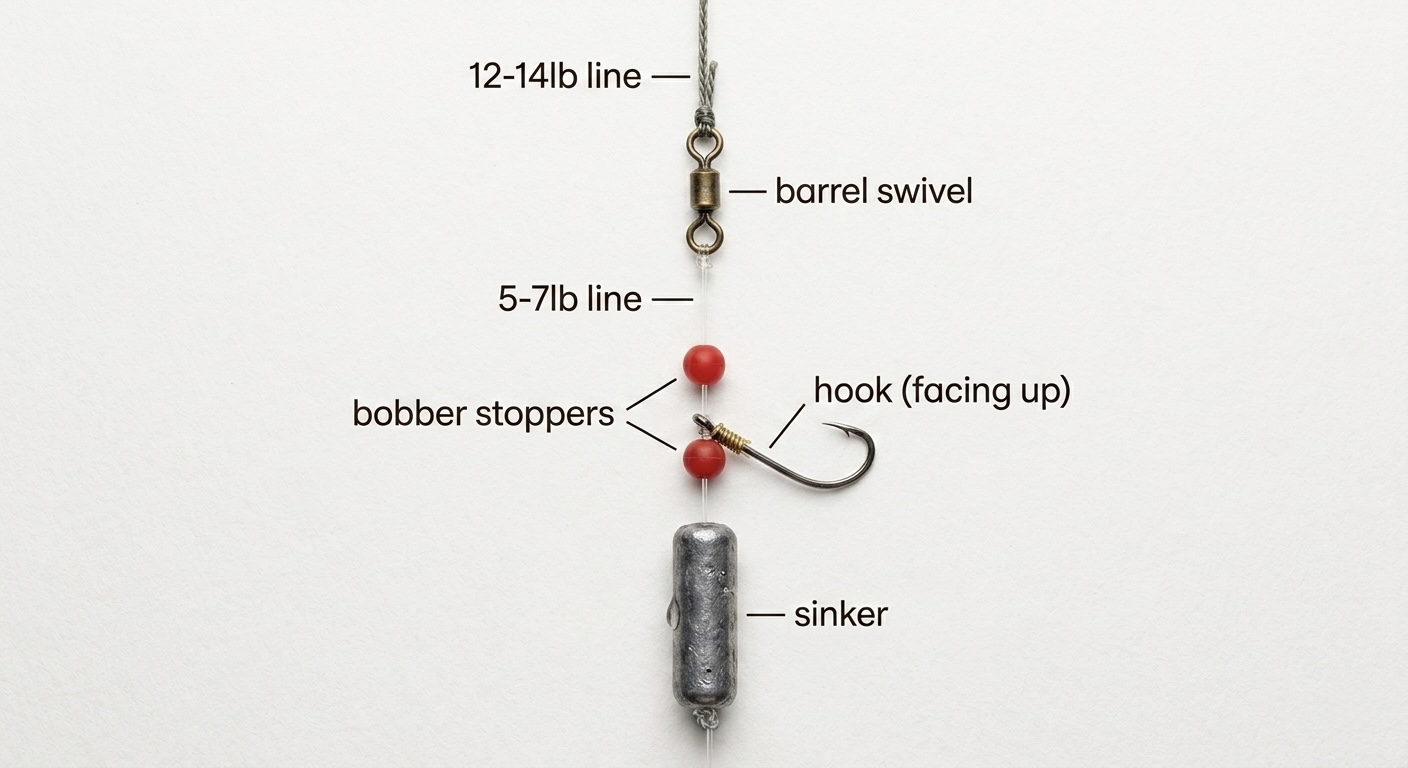
①8-12 lb fluoro main, tied direct or with leader
②Palomar knot, leave a long tag (8-18")
③Hook point facing UP · soft plastic worm or minnow
④Cylinder drop shot weight on tag end
▸ Texas Rig
Bass · weedless · heavy cover
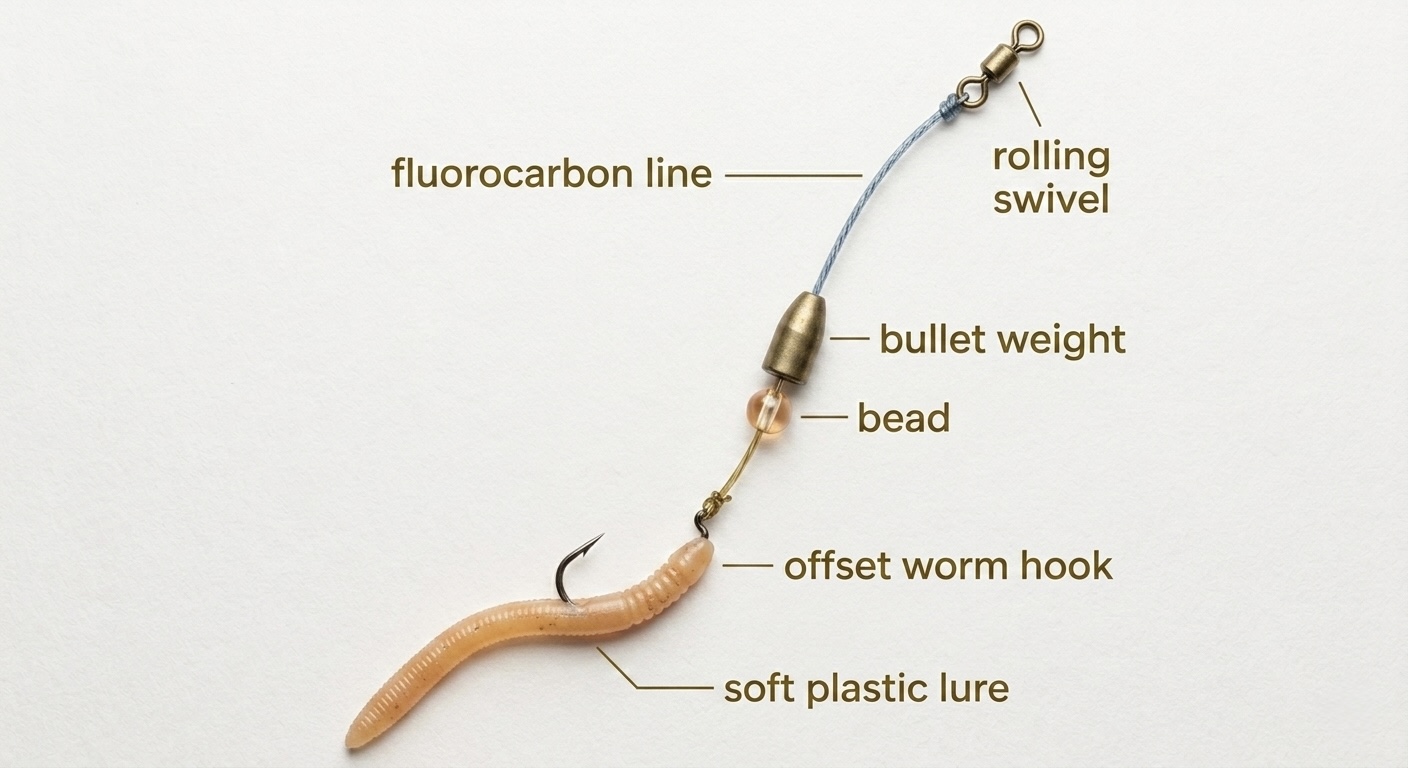
①12-17 lb fluoro or 30-50 lb braid for cover
②Tungsten bullet weight 3/16-1/2 oz (pegged for cover)
③3/0-4/0 EWG worm hook
④Soft plastic worm or creature, hook point tucked back into body
▸ Ned Rig
Smallmouth, finicky bass · finesse magic
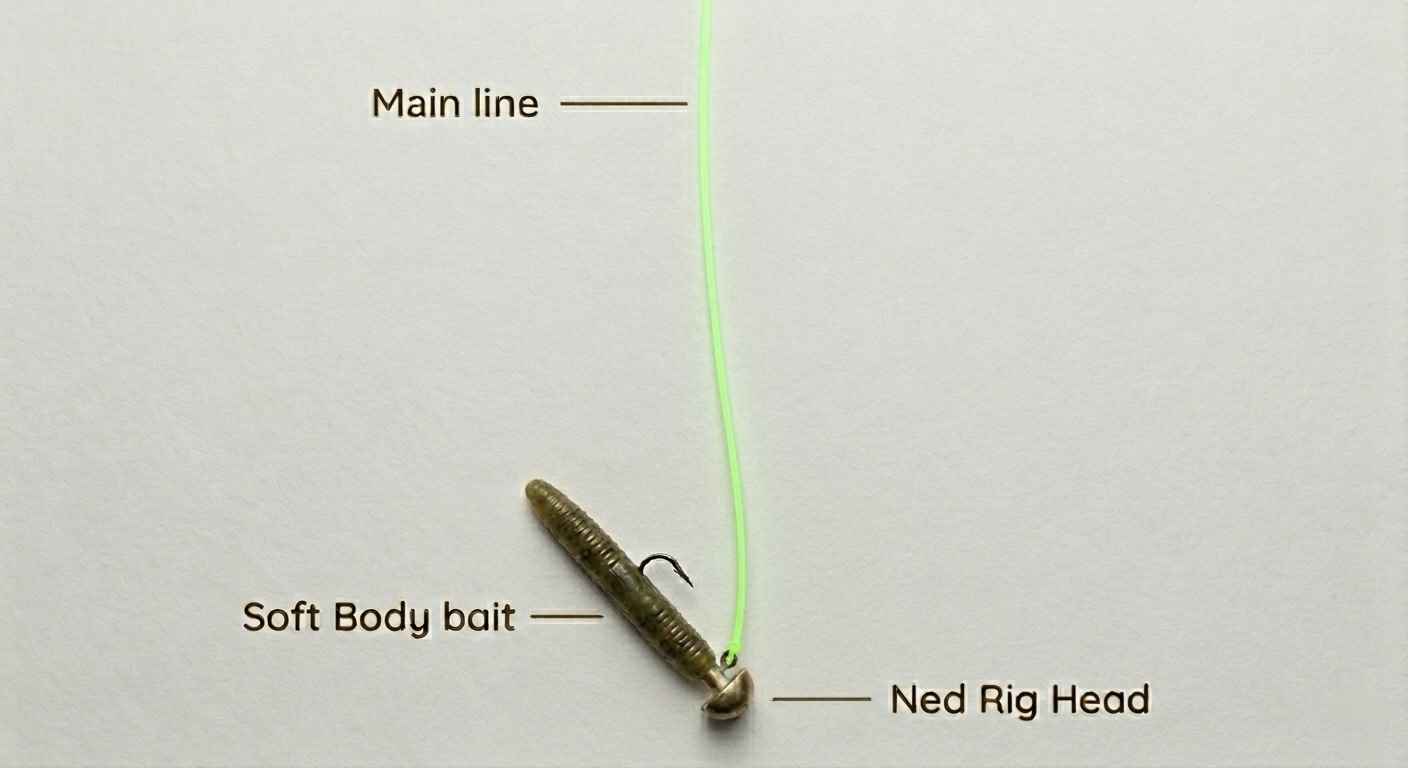
①6-10 lb fluoro spinning gear
②Mushroom-head jig 1/10-1/6 oz · light wire EWG
③2-3" stick worm (Z-Man TRD, half a Senko)
▸ Kokanee Trolling Rig
Lake Merwin, Yale, Lake Chelan
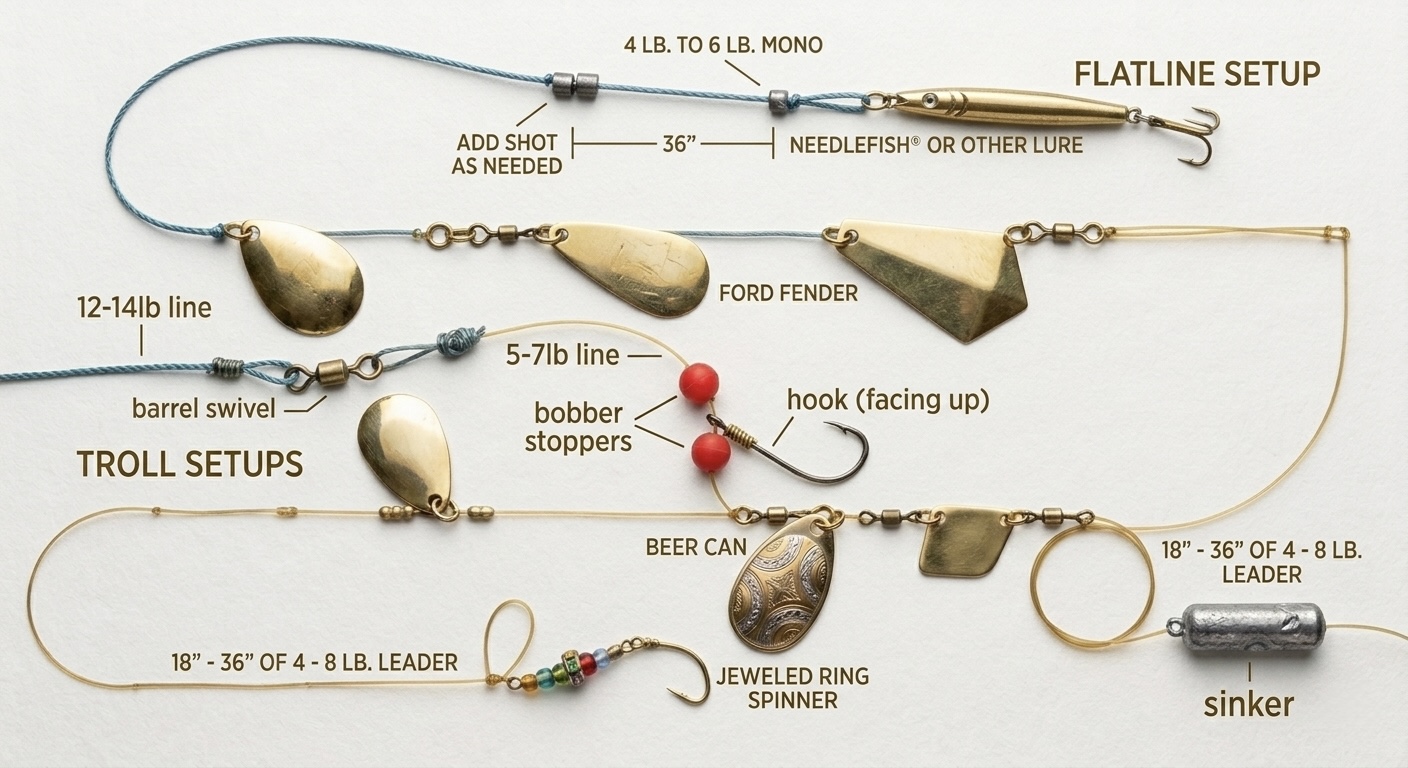
①8-10 lb main from trolling rod
②4" dodger (silver, copper, pink, watermelon)
③12-18" leader (short = more action)
④Pink/UV hoochie or small spinner + shoepeg corn cured in scent
▸ Float + Jig (Steelhead)
Most versatile steelhead presentation
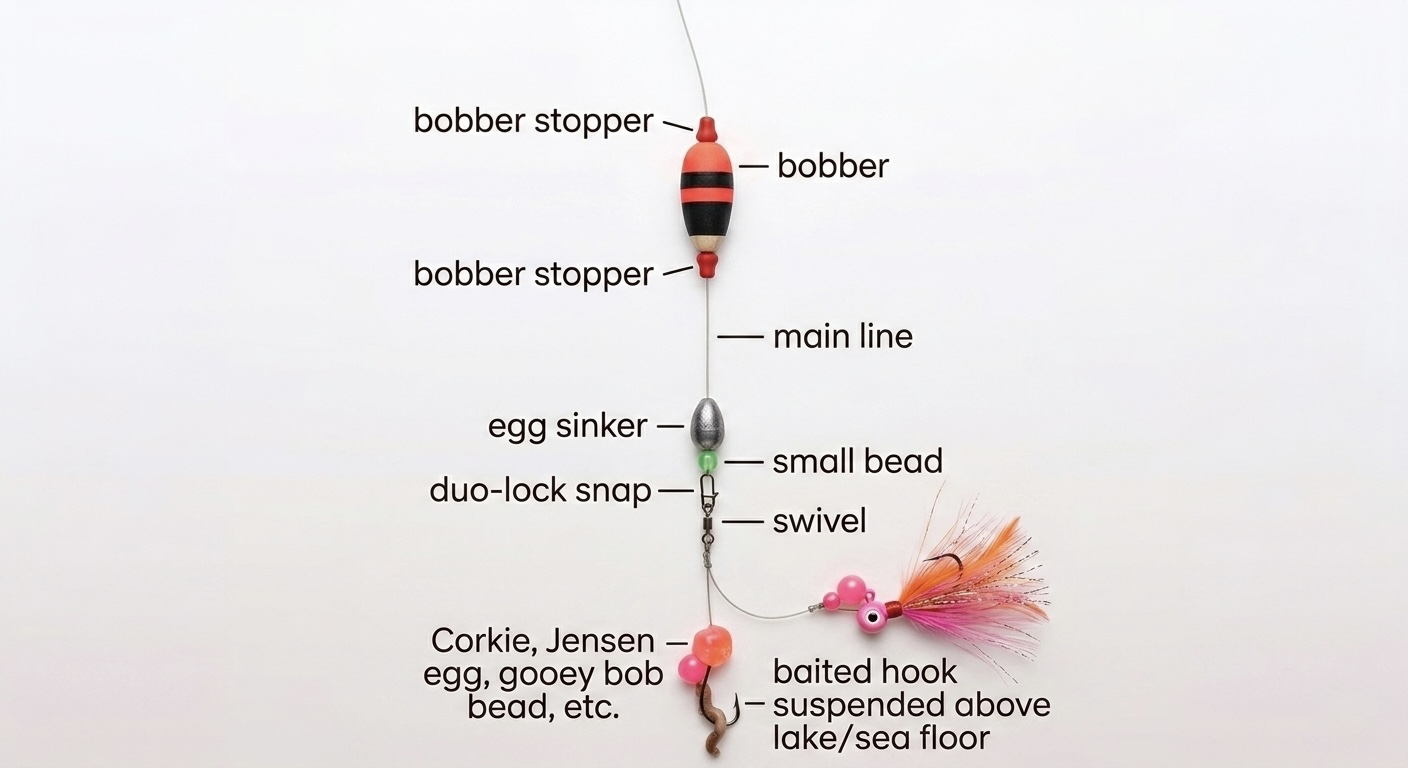
①12-15 lb mono main, bobber stopper at depth
②Slip float (Thill Pro Series or Beau Mac)
③2-3 split shot below float, 18" above jig
④1/8 oz marabou jig in pink, peach, black + bead
▸ Surf Perch Rig
Coast beaches · pier · jetty
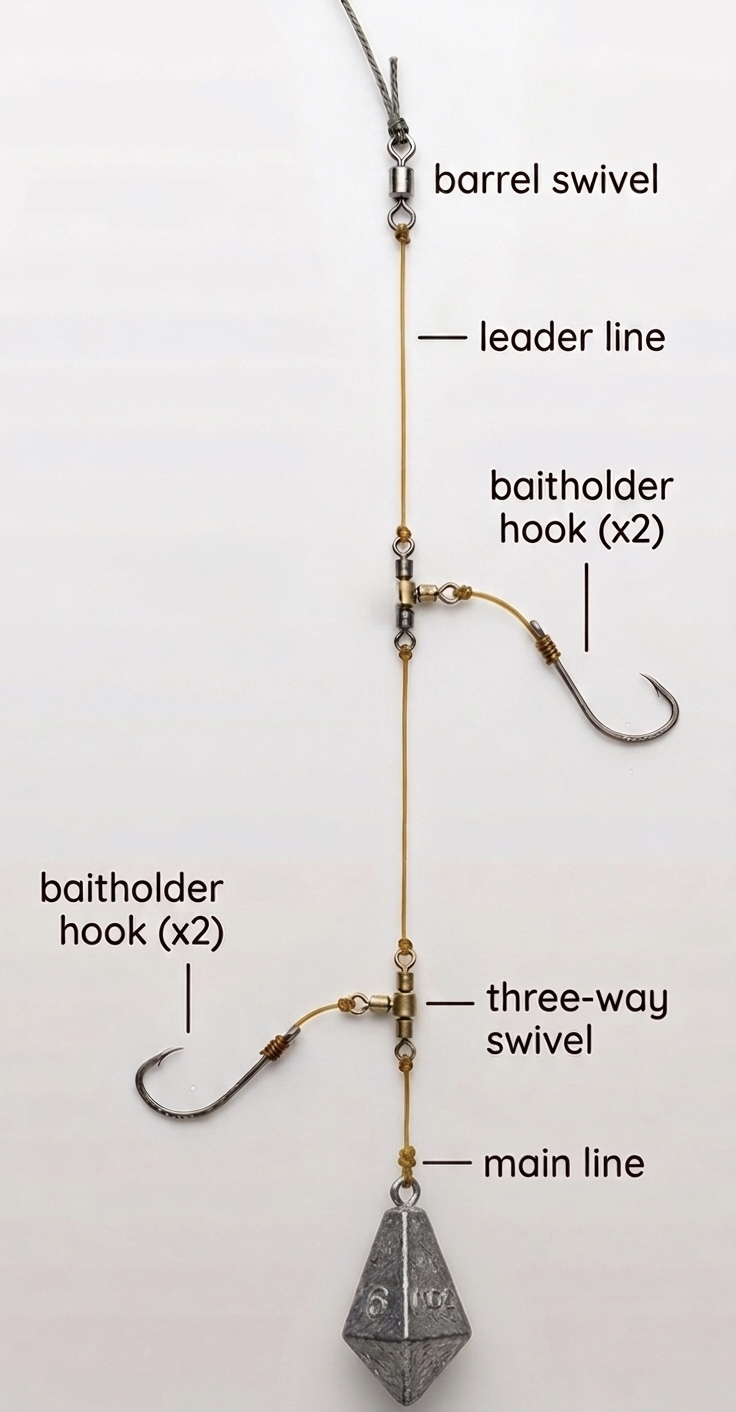
①10-15 lb mono mainline (mono floats over swells)
②Top dropper · size 4 baitholder, 6" leader
③Bottom dropper · same, 8" leader
④Pyramid sinker 1-3 oz (matches surf · use more in heavy waves)
⑤Bait: sand crab, mussel, raw shrimp, Berkley Gulp! sandworm
▸ Mooching Rig (Salt Salmon)
Puget Sound coho, Chinook · drift / slow troll
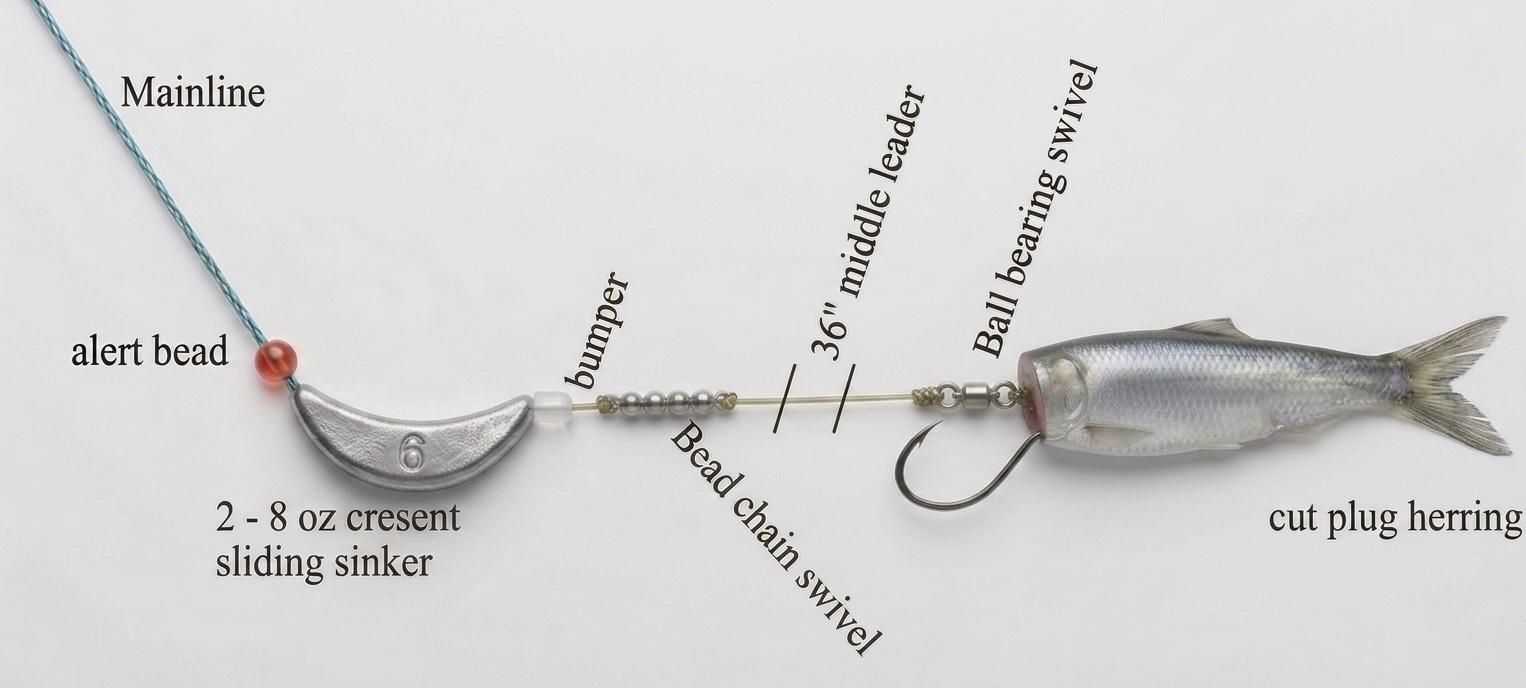
①20 lb mono main (mooching rod 10-11 ft)
②Banana/crescent sinker 2-6 oz
③6 ft mono leader, 20 lb
④Cut-plug herring on tandem 4/0 hooks · angled cut creates spin
▸ Halibut Spreader
WA/OR coast offshore · 100-300 ft
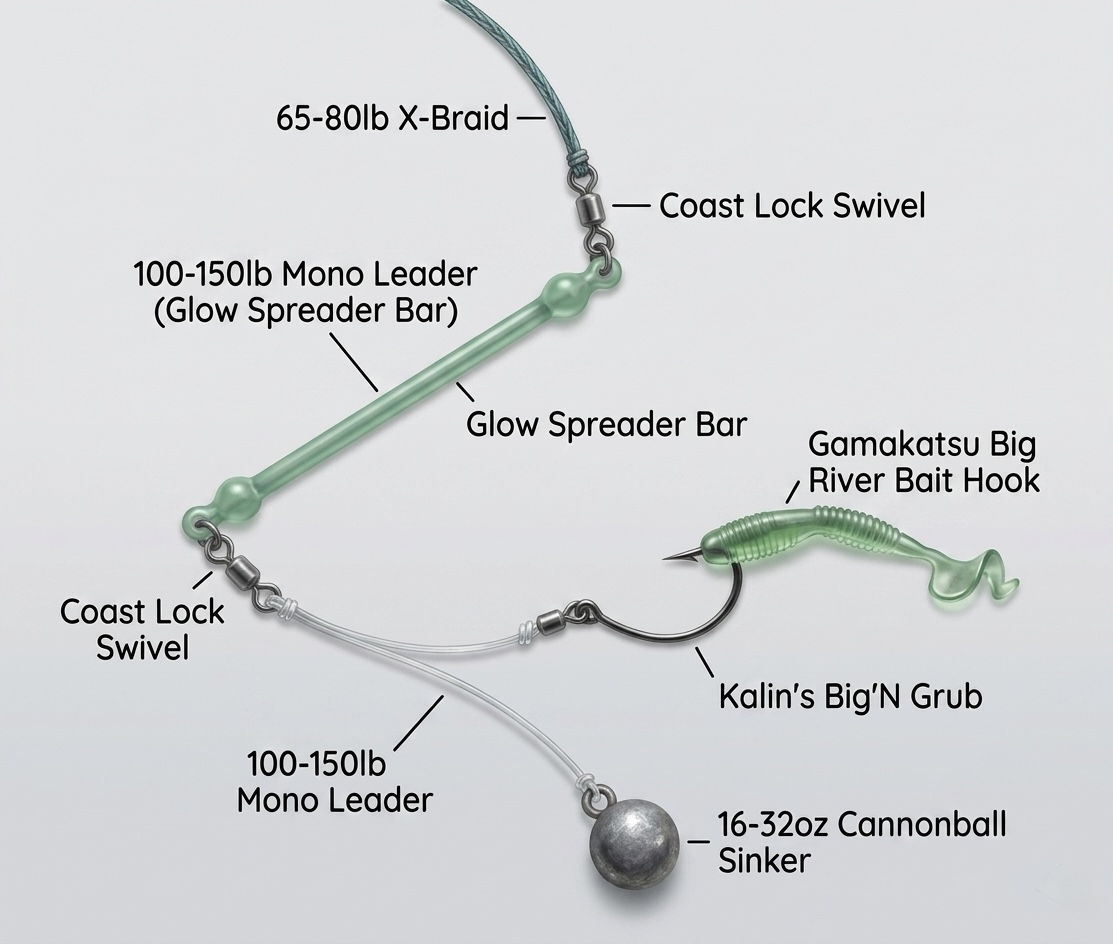
①65-80 lb braid main, heavy boat rod
②Wire spreader bar 12" keeps bait off bottom
③Cannonball 16-32 oz (depth + current dependent)
④16/0 circle hook on 3 ft leader, herring or salmon belly
▸ Rockfish/Lingcod Jig
Vertical jig · 40-200 ft rocky bottom
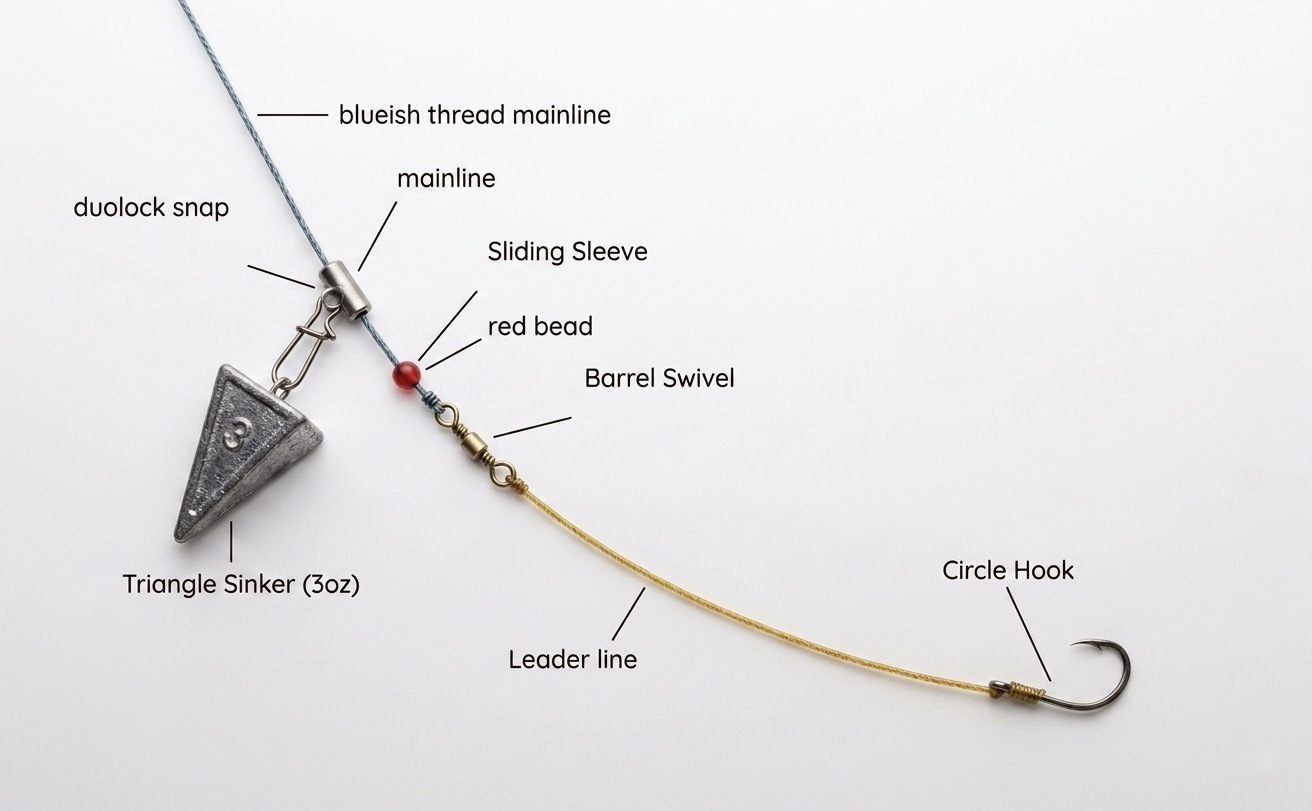
①50-65 lb braid (sensitivity at depth)
②30 lb fluoro leader 4-6 ft
③Diamond or knife jig 4-12 oz · drop to bottom, lift-fall
④Add a swimbait teaser 18" above for double-headers
▸ Sturgeon Anchor Rig
Columbia C&R · barbless circle required
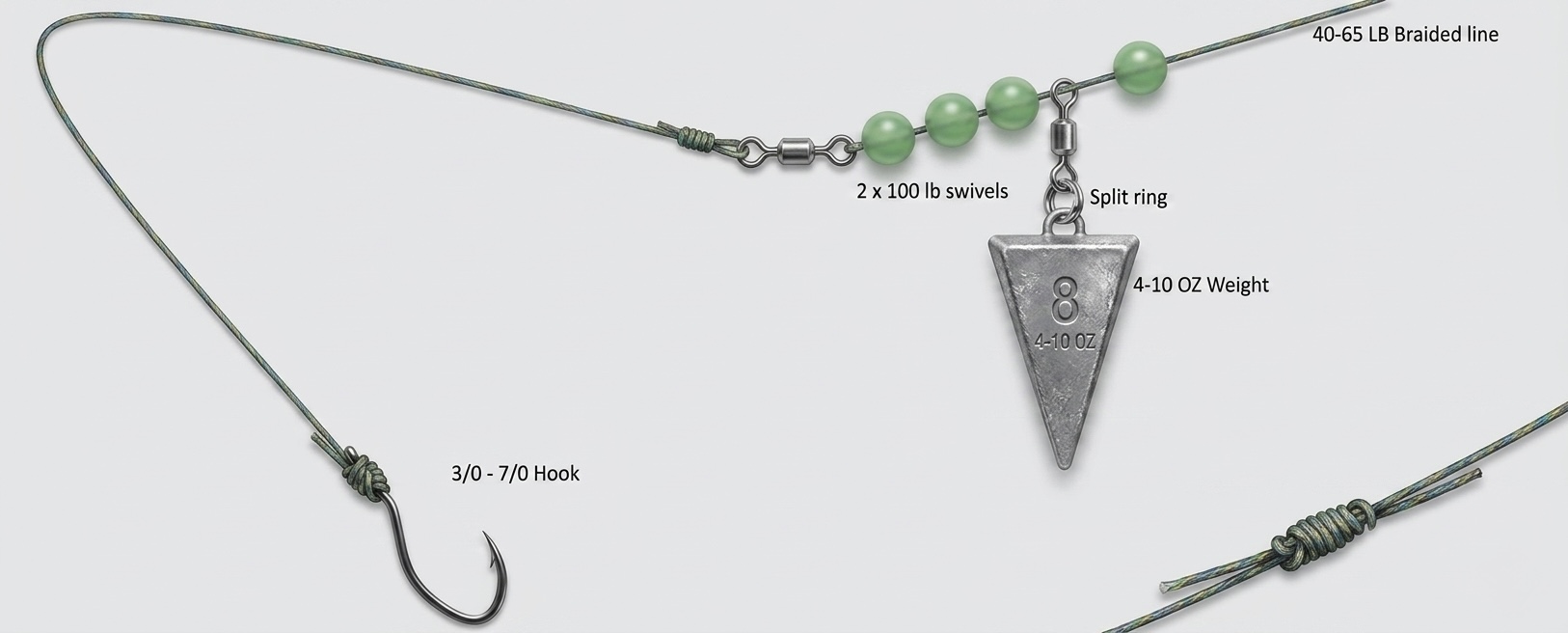
①50-65 lb braid main, heavy sturgeon rod
②Pyramid weight 4-12 oz on slider above swivel
③60-80 lb mono leader 12-18"
④Required: 5/0-8/0 single barbless circle hook, snelled
HOOK + TACKLE CHART
Size by species · fresh + salt
▸ Hook Size Reference
After #1, sizes count up with /0 suffix. Smaller numbers = larger hooks until you hit /0, then larger numbers = larger hooks.
SMALL → 18 · 14 · 10 · 8 · 6 · 4 · 2 · 1 · 1/0 · 2/0 · 3/0 · 4/0 · 5/0 · 6/0 · 8/0 · 10/0 · 16/0 → LARGE
FRESHWATER
| Species | Hook | Type | Line |
|---|---|---|---|
| Bluegill / Sunfish | 10-12 | Long shank, aberdeen | 4-6 lb |
| Crappie | 6-8 | Aberdeen, jig 1/32-1/16 oz | 4-6 lb |
| Yellow Perch | 6-8 | Baitholder, jig 1/16-1/8 oz | 4-8 lb |
| Trout (stocker) | 8-12 | Treble (PowerBait), baitholder (worm) | 4-6 lb |
| Trout (lake) | 6-10 | Baitholder, single inline | 6-8 lb |
| Cutthroat | 8-10 | Single barbless, fly | 4-8 lb |
| Kokanee | 6-8 tandem | Pre-tied kokanee rigs | 8-10 lb |
| Smallmouth Bass | 1-2/0 | Drop shot, jig 1/4-3/8 oz | 8-12 lb |
| Largemouth Bass | 2/0-4/0 | EWG worm hook | 12-17 lb |
| Walleye | 2-4 | Octopus harness, 1/4-1/2 oz jig | 8-12 lb |
| Channel Catfish | 2/0-5/0 | Circle | 15-25 lb |
| Shad | 4-6 | Shad dart, curly tail jig | 10-15 lb |
| Steelhead | 1-1/0 | Octopus, single barbless | 10-15 lb |
| Coho (river) | 1/0-2/0 | Octopus, single barbless | 15-20 lb |
| Chinook (river) | 2/0-3/0 | Octopus, single barbless | 20-25 lb |
| Sturgeon C&R | 5/0-8/0 | Circle, barbless required | 50-65 lb braid |
| Tiger Muskie | 5/0-7/0 | Single, barbless | 50-80 lb braid + 80 lb leader |
SALTWATER
| Species | Hook | Type | Line |
|---|---|---|---|
| Surf Perch | 4-6 | Baitholder, hi-low dropper rig | 10-15 lb mono |
| Pile Perch / Striped | 4-6 | Same as surf perch | 10-15 lb |
| Rockfish | 3/0-5/0 | Circle, swimbait jig 2-6 oz | 50-65 lb braid + 30 lb leader |
| Lingcod | 5/0-8/0 | Circle, swimbait jig 4-12 oz | 50-65 lb braid + 50 lb leader |
| Halibut | 12/0-16/0 | Circle on spreader | 65-80 lb braid + 80 lb leader |
| Coho (salt) | 2/0-3/0 tandem | Octopus, mooching tandem | 20 lb mono |
| Chinook (salt) | 4/0-5/0 tandem | Octopus tandem, treble on plug | 25-30 lb mono |
| Pink Salmon | 1/0-2/0 | Octopus, Buzz Bomb hooks | 10-15 lb |
| Albacore Tuna | 5/0-7/0 | Live bait circle, troll heads | 40-65 lb mono |
| Cabezon | 3/0-5/0 | Circle, jig with bait | 30-50 lb braid |
| Greenling | 2-4 | Baitholder | 8-15 lb |
| Dungeness Crab | — | Crab pots / ring nets · chicken, fish carcass | — |
SINKER GUIDE
| Use | Type | Weight |
|---|---|---|
| Trout slip rig | Egg sinker | 1/8-1/4 oz |
| Bass Texas rig | Tungsten bullet | 3/16-1/2 oz |
| Bass drop shot | Drop shot cylinder | 1/4-3/8 oz |
| Walleye bottom bouncer | Wire bouncer | 1-3 oz |
| Shad | Bank or pencil | 1-2 oz |
| Salmon plunking | Pyramid or cannonball | 2-4 oz |
| Salmon mooching | Crescent/banana | 2-6 oz |
| Salmon downrigger ball | Cannonball | 8-16 lb |
| Sturgeon anchor | Pyramid (slider) | 4-12 oz |
| Surf perch | Pyramid | 1-3 oz |
| Halibut | Cannonball | 16-32 oz |
| Rockfish/Ling jig | Lead diamond/iron | 4-12 oz |
ESSENTIAL KNOTS
These 6 cover 95% of fishing
Arbor Knot SPOOL ONLY
Line to reel spool
- Pass line around the spool arbor.
- Tie an overhand knot around the main line with the tag end.
- Tie a second overhand knot in the tag end only (this becomes the stopper).
- Pull main line tight. The second knot acts as a stopper against the first.
- Trim tag end close.
Improved Clinch 85% STRENGTH
Hook, lure, swivel to line · mono/fluoro
- Pass tag end through hook eye.
- Wrap tag end around main line 5-7 times.
- Pass tag end through the small loop above the eye.
- Pass tag end back through the big loop you just formed.
- Wet the knot. Pull main line slowly to tighten. Trim tag.
Palomar Knot 95% STRENGTH
Strongest with braid · hooks and swivels
- Double 6" of line and pass the loop through hook eye.
- Tie a loose overhand knot with the doubled line.
- Pass the hook entirely through the loop.
- Wet. Pull both tag and main line to tighten.
- Trim tag close.
Double Uni 90% STRENGTH
Braid to mono/fluoro leader · easy braid-to-leader
- Overlap the two lines about 6".
- Form a loop with one line. Wrap tag 4-5 times around both lines and through the loop.
- Wet and pull tag to tighten this first knot.
- Repeat on the other line, mirroring the first knot.
- Pull both main lines apart slowly. The two knots slide together. Trim tags.
FG Knot 99% STRENGTH
Slimmest braid-to-fluoro · passes through guides
- Hold leader under tension (clip it or have a partner hold).
- Cross-wrap braid over the leader 20 times each direction.
- Half-hitch 5-6 times around both lines to lock the wraps.
- Half-hitch over braid alone 3 times.
- Pull everything tight. Trim leader close, leave tiny tag on braid.
Snell Knot 100% W/ CIRCLE
Mandatory for sturgeon circle hooks · best for salmon eggs
- Pass leader through hook eye from front, run back along shank.
- Form a loop on the back side of the hook.
- Wrap the leader around the hook shank and through the loop 6-8 times, working from eye downward.
- Hold wraps tight against shank. Pull standing line to cinch wraps in line with shank.
- Wet and tighten fully. Trim tag.
Universal rule: Always wet your knots with spit or water before tightening. Friction from a dry knot weakens line by up to 50%. The pros lose more fish to bad knots than bad luck.
FIELD TIPS
What the pros do that beginners miss
PRESENTATION
Match the hatch
Look at what's in the water. Baitfish color, crawfish shades, insect hatches. Match size first, then color. A 3" baitfish gets a 3" bait, not a 5".
Slow down
Most anglers retrieve too fast. Cold water demands slower. If nothing bites, cut your speed in half and pause more. The bite often comes on the pause.
Work the angles
Cast past your target, retrieve through the strike zone. A bait appearing from nowhere is more convincing than one landing on a fish's head. Skipping baits under docks and overhangs unlocks fish nobody else reaches.
TACKLE
Line matters more than most admit
Fluorocarbon for clear water finesse (invisible underwater). Braid for sensitivity and heavy cover (zero stretch). Mono for topwater (it floats). Most anglers run one type and lose fish to it.
Check your leader every trip
A nick above the knot loses fish. Run your fingertips down the last 3 feet before every session. If anything feels rough, retie. Takes 30 seconds. Saves the trip.
Sharp hooks are non-negotiable
New hooks out of the pack are often dull. Test with a fingernail: sharp drags, dull slides. Touch up with a file or replace after every solid fish. Steelhead and salmon anglers retie at every hookset.
ON THE WATER
Don't leave fish to find fish
If you're catching, stay. Even when the bite slows, work the area thoroughly. Most schools have a 15-30 minute window. Move only when a productive spot goes truly cold.
Be quiet
Footsteps on aluminum, gear banging the hull, slamming a tackle box. Fish feel vibration through water and ground. Approach banks slowly, especially in clear water. Wear neutral colors.
Log your trips
Water temp, time of day, bait, depth, weather, what worked, what didn't. Patterns emerge over seasons. The best anglers on any water fish data as much as instinct. Apps: Fishidy, Fishbrain, Anglr.
Read the water
Diving birds = baitfish on surface. Nervous water with no wind = predators below. Bubble trails on still mornings = feeding fish. Color changes = depth or current breaks where fish stage.
BEGINNER WINS
Start with one technique, one species
Master a worm-and-bobber for panfish before chasing salmon. Catching builds skill faster than learning rigs that haven't put fish in the boat yet.
Free resources that actually help
YouTube: TacticalBassin (bass), Jay Siemens (Canada/PNW), Addicted Fishing (PNW salmon/steelhead), Salt Strong (saltwater). WDFW stocking reports tell you exactly where trout were dumped. Fishbrain shows what's being caught near you.
Hire a guide once
$200-400 for a half-day puts you 2 years ahead. Guides show you spots, technique, gear, and timing in 6 hours that takes solo learners seasons to figure out. Tip well, ask questions, take notes.
CATCH & RELEASE
Wet hands. Horizontal hold. 30 seconds.
Wet your hands before touching any fish. Slime layer is their immune system. Keep them horizontal (dropping a bass with the jaw bent vertically can paralyze it). Out of water under 30 seconds when possible.
Skip warm-water C&R
When water hits 70°F+, even quick releases stress trout and salmon past survival. Target warm-water species (bass, panfish, catfish, walleye) and leave the cold-water fish until temps drop.
Revive properly
In moving water, face the fish upstream. In still water, gently move it side-to-side (never back and forth · gills only push one direction). Hold upright until it kicks free on its own.
SAFETY
PFD always
PNW water is cold year-round. Hypothermia kicks in fast even in summer. Inflatable PFDs are comfortable enough that there's no excuse. The Coast Guard requires one per person on every boat regardless.
File a float plan
Text someone where you're going and when you'll be back. Carry a fully charged phone or VHF for saltwater. Garmin inReach for remote rivers. Cell service is spotty across most of the PNW backcountry.
Respect the bar and surf
Columbia Bar, Tillamook Bar, La Push, Westport. These bars kill experienced boaters every year. Check the bar report. Sneaker waves on PNW beaches are not a myth. Never turn your back on the ocean.
TRIP LOG
Your personal catch history
0
Trips
0
Fish
0
Species
Log a Trip
No entries yet